

"Critters"--The Belted Kingfishers
March 10, 2026

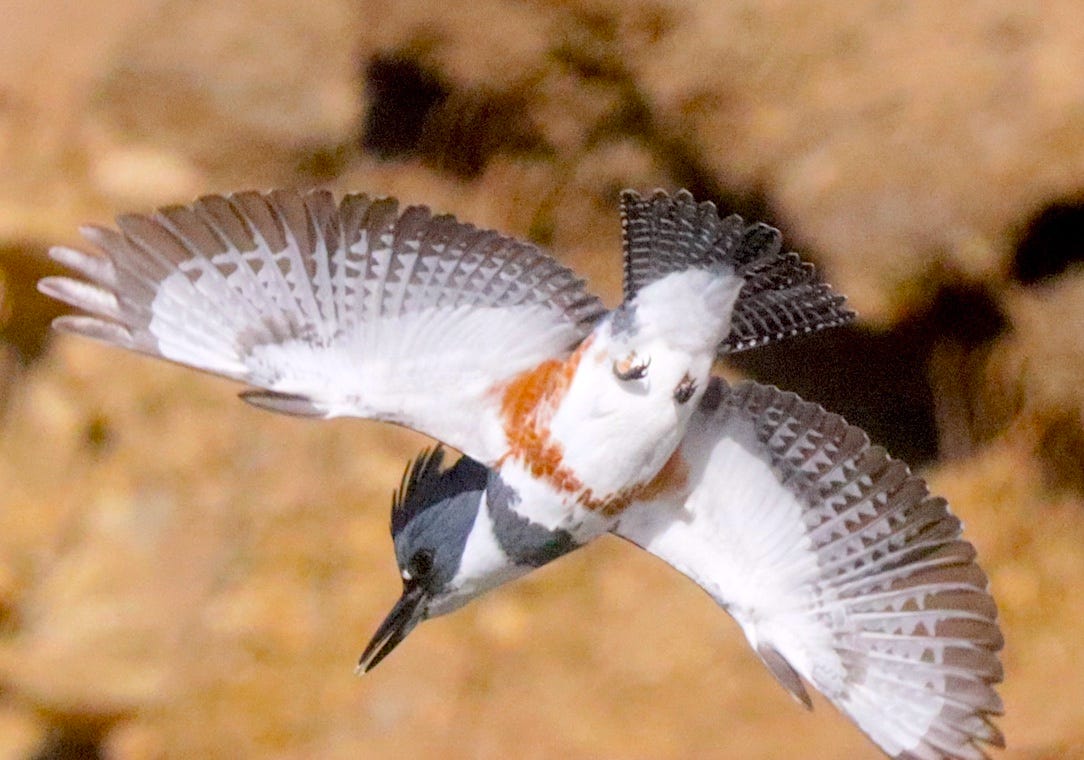
North America’s chattering work of flying art
Occasionally I make good decisions and, one of them, a few years ago involved getting to the New Moon Gallery, on East Sprague, a bit early to hear Marina Richey, the author of what would become the award-winning book Halcyon Journey , In Search of the Belted Kingfisher.
I thought it would be therapeutic. Her book is about her field work to find and study the Belted Kingfisher on a creek just outside Missoula, Montana.
This line from her promo copy says it all: “Epiphanies and a citizen science discovery punctuate days tracking a bird that outwits at every turn.”
It’s the “outwits at every turn” phrase that captures my experience trying to photograph them.
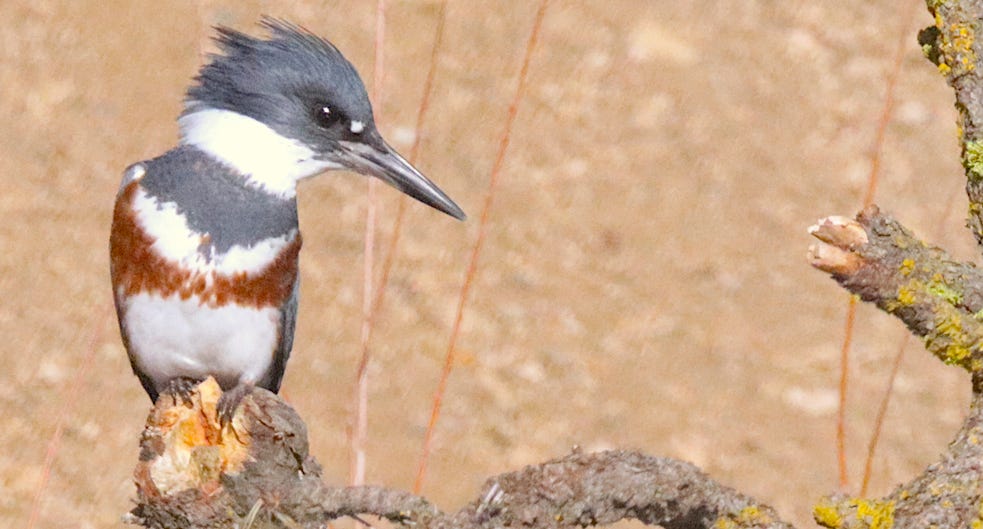
By then, I’d been trying for a while to get a presentable photograph of the subject bird. It just seemed impossible. Only rarely would I spot a kingfisher before it had me in sight. And any movement in the open, even from a hundreds yards away, would cause the bird to take-off, usually chiding me with its signature chattering call. Marina had to have experienced this and, frankly, it’s not the sort of thing you can bring up with just anybody, because just anybody would usually excuse themself and find someone else to chat with.
Long story short, Marina was a delight and our conversation about the bird’s cleverness and allergic reaction to people trying to get close them rippled with laughter. Suffice to say, her book and our conversation inspired me to try some different approaches, and accept the patience involved in that process, without giving into frustration.
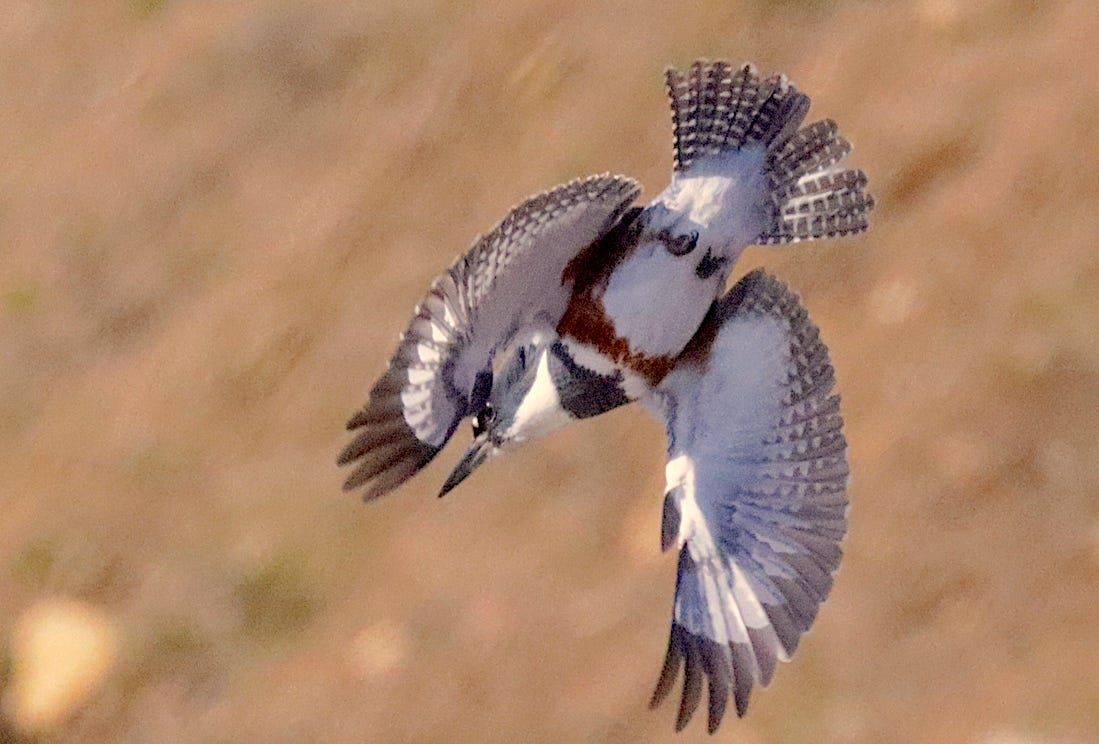
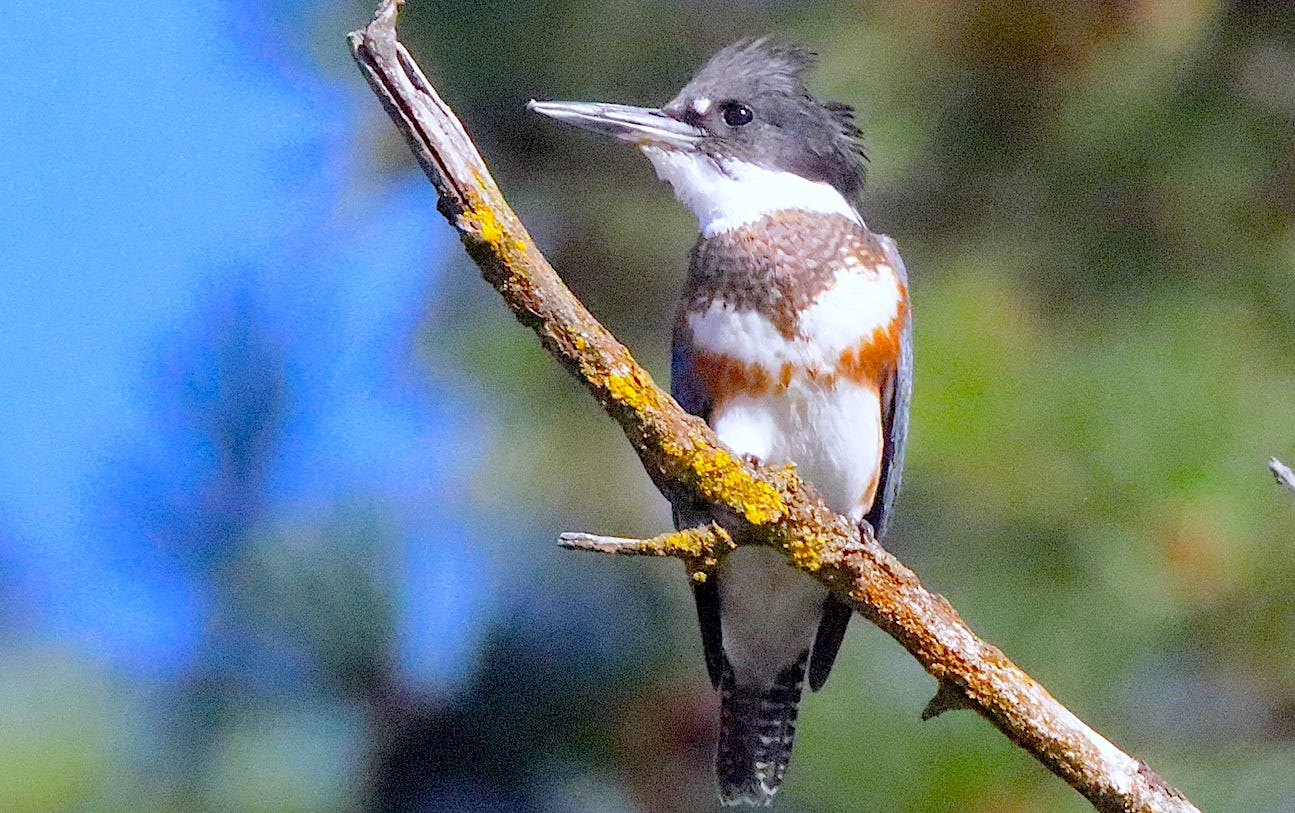
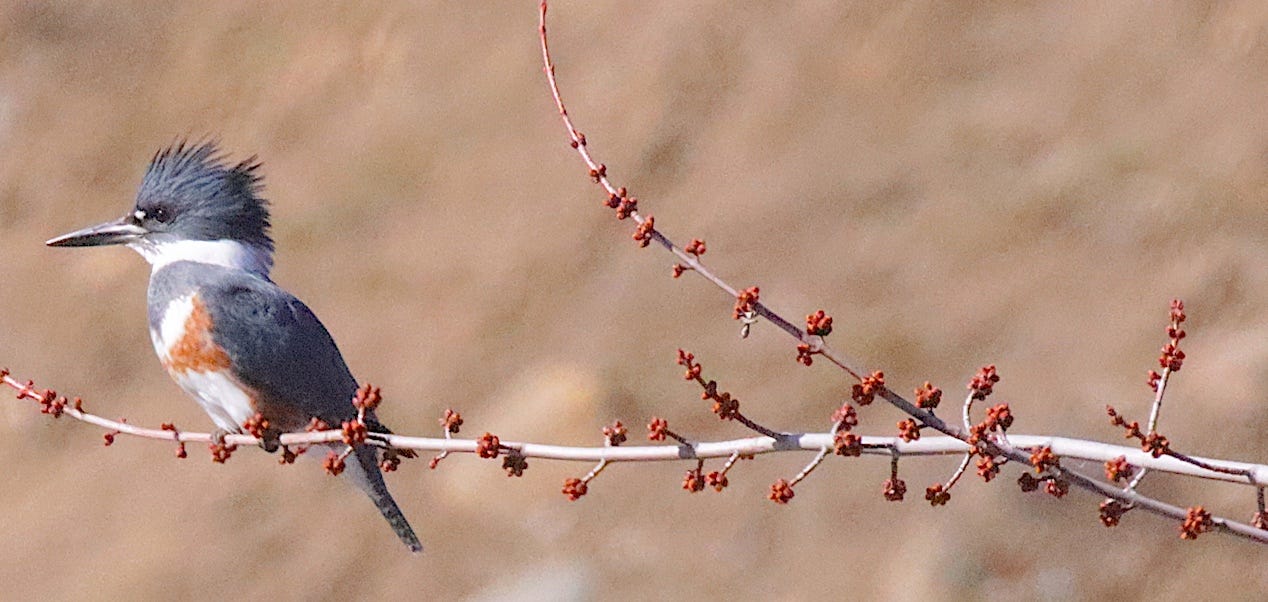
The Belted Kingfisher is a beautiful creature, and very rare in the sense that it’s the females that are the more colorful in the pairings—with a maroon belt below the grayish blue belt that both males and females have. They nest in bank cavities, eat fish (obviously) and crawfish, and are here nearly year-round. Fun fact: like Magpies, the Kingfishers have what the scientists call a “nictitating” third eyelid. The Magpies need it to protect their eyes in the thorny business of nest building. The Kingfishers use it as a pair of natural goggles was they slash into water to snatch prey—tjc
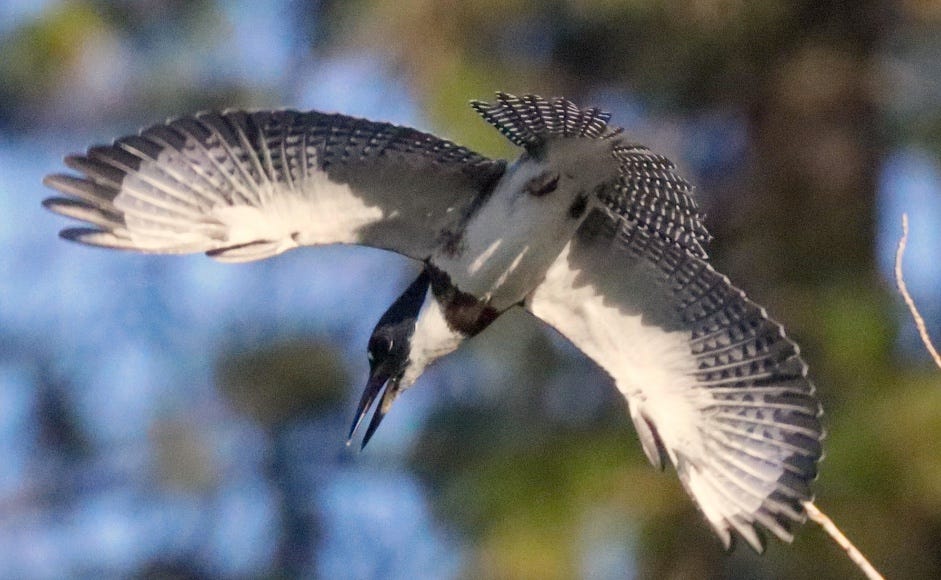
Diving male kingfisher (missing the maroon belt that distinguishes the more colorful females)
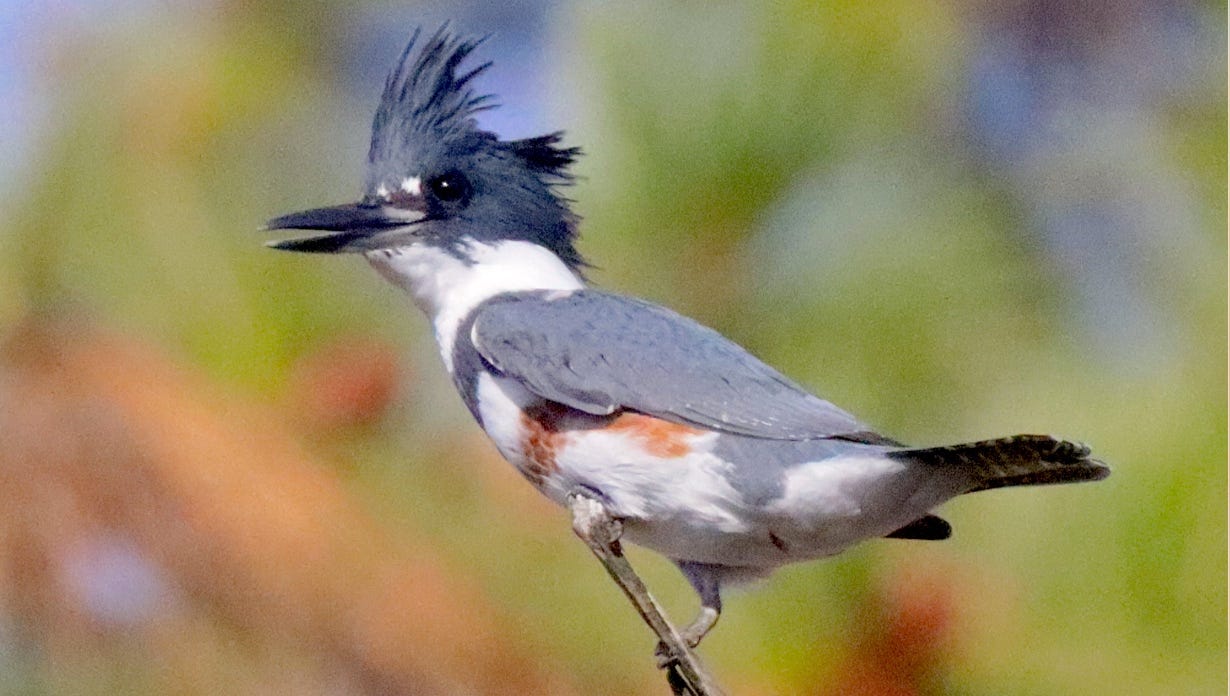
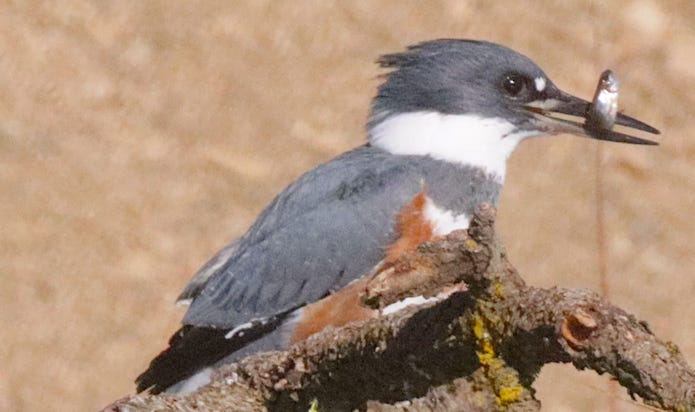
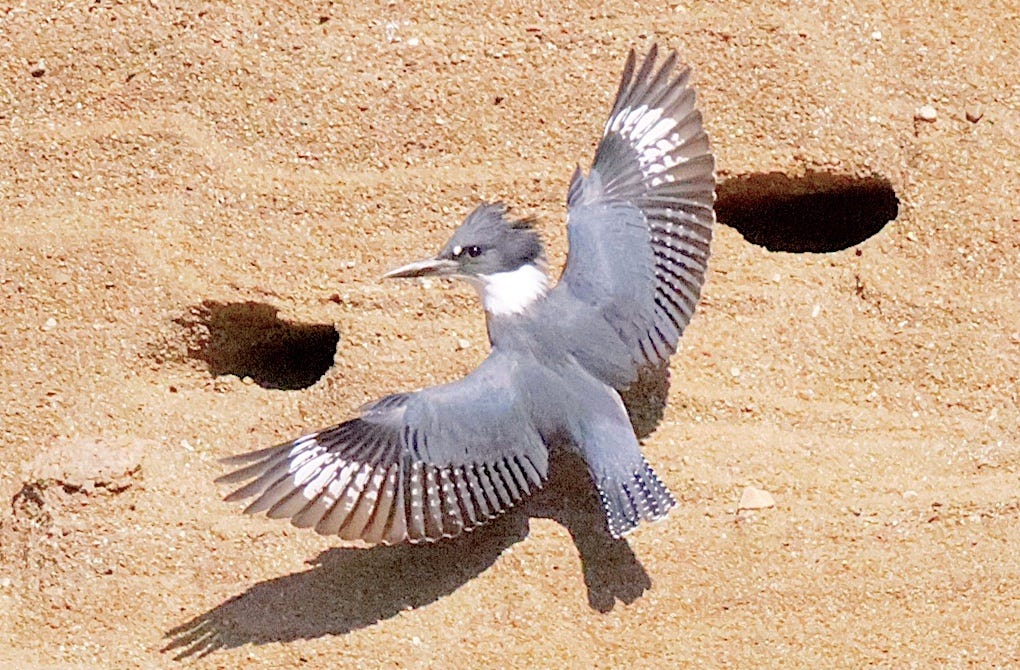
Kingfishers only nest in deep cavities on cliffs or banks, and use their long bills to excavate new dens.
To support this endeavor and other explorations, please become a paid, annual subscriber to The Daily Rhubarb at the link above. tx, tjc
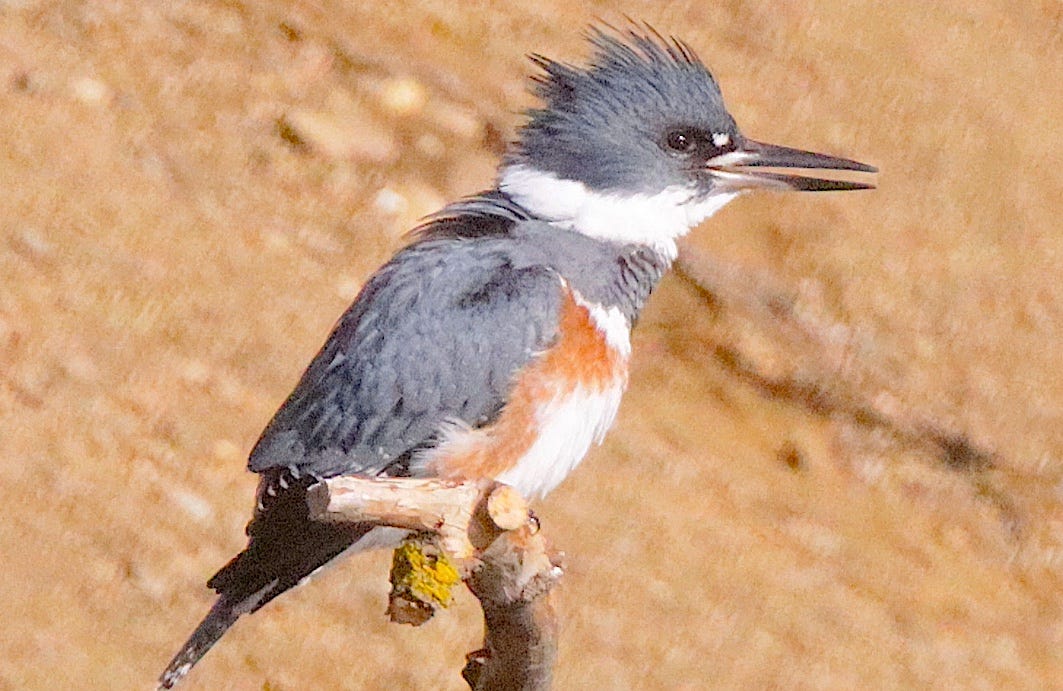

You surely did find some kingfishers to pose for you. Bravo