"Critters"--Meet the Otters
December 25, 2025

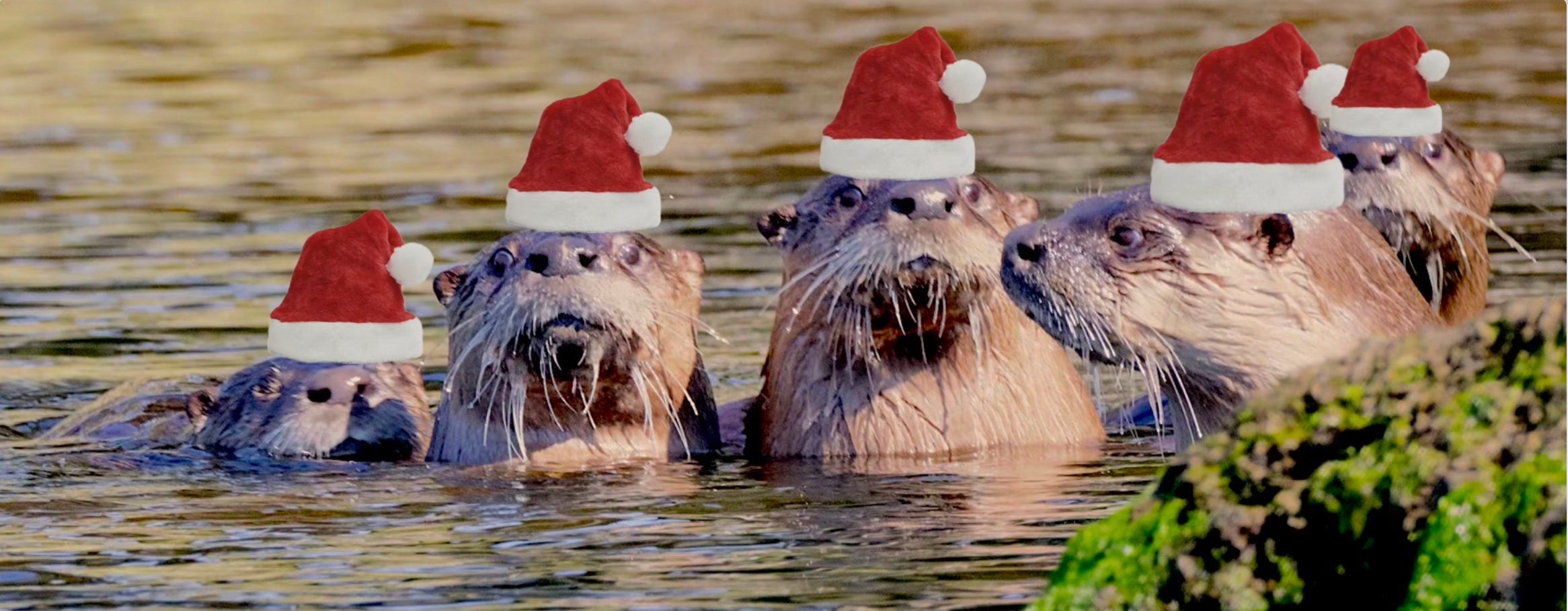
Comedy, grace, and peerless swimmers
My favorite otter encounter was my first.
Coming from an aquatic family I simply don’t remember not knowing how to swim. I wanted the same for my children but also, at the same time, wanted them to experience and enjoy nature in the process. So, to the extent practicable, I led them to open water for their swimming lessons, almost as soon as they could walk.
My favorite photograph of my then-young daughter is her standing on a very, very cold beach in Gray’s Harbor County with a boogie board she’d brought with her from Spokane. Wearing her bathing suit—not a wetsuit—she stared out, toward Japan, for most of a minute, as if measuring the distance to the horizon. And then she just dove in with the board. What’s not to love about that?
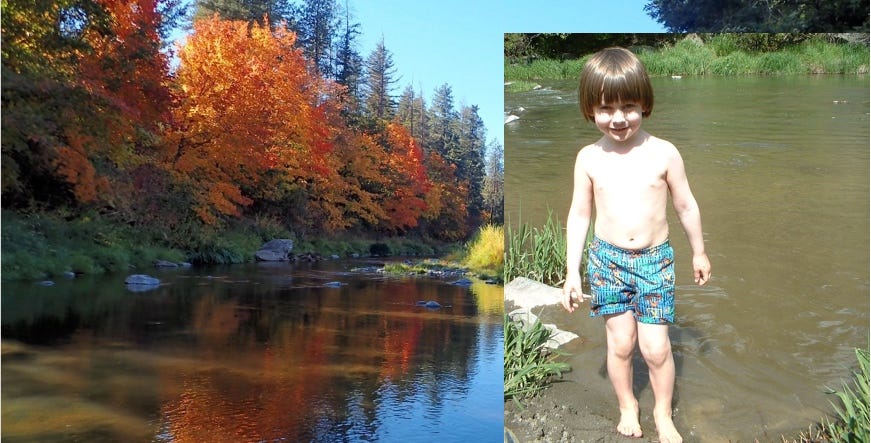
One of my favorite photographs of my son (above) was taken at about the time—more than 20 years ago now—that we got to swim with a river otter. It was a young otter, out by itself, happily body surfing in the creek alongside us. We were just below Browne’s Addition, about a hundred yards upstream from where thousands of Bloomsday runners cross the Marne bridge over Latah creek each spring, in a flood of humanity.
River otters inhabit all of the Columbia River drainage and upwards into Canada and Alaska, including the Great Lakes. They can also be found in much of the southeast U.S., but not so much in the middle of the country. They can be incredibly curious and engaging. But I’ve also had a big otter bark at me, in a “get of my lawn” sort of way. So there is that…
A geologist once told me Latah Creek has always been a “flashy” stream even before its watershed (which includes much of the northern Palouse) was intensively farmed. That “flashiness” is reliably on display in winter and early spring, when rain-on-snow induces a torrent of chocolate water that often overflows the banks, carrying tons of Palouse loess with it. But from late spring to at least mid-autumn it calms down, becomes clear and swimmable.
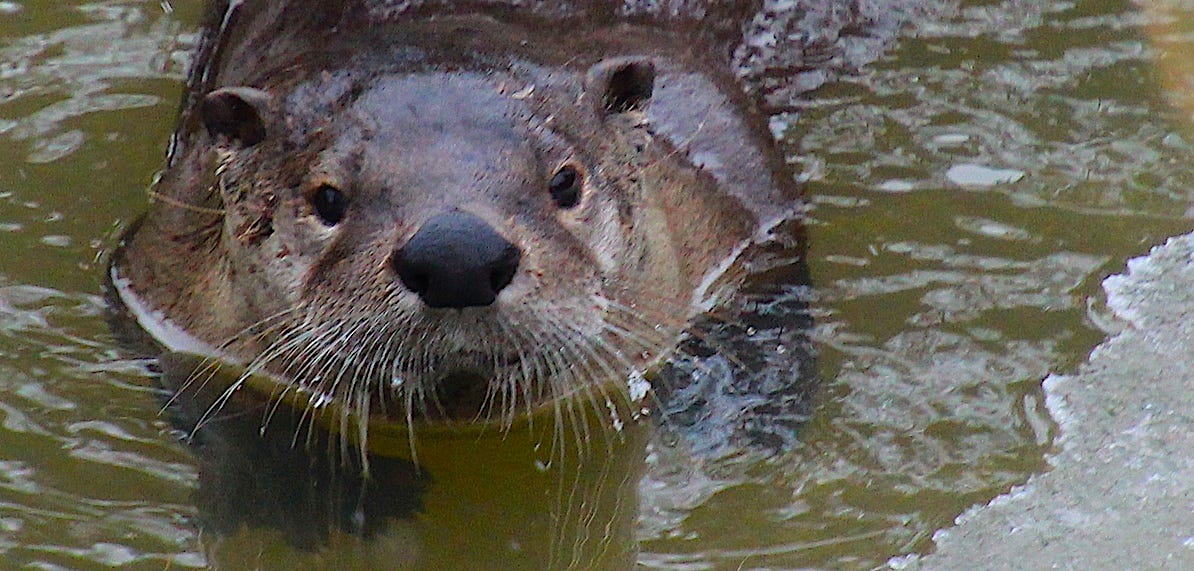
The young otter who swam with me and Devin was right out of my field guide: “River otters are among the most playful of animals. A lone river otter often amuses itself by rolling about, sliding, diving, or ‘body surfing’ along on a rapid current.”
A river otter’s tail is thick and tapered; nearly as long as its body.
Seasons Greetings! Today’s post is free so please enjoy and share. If you’re able, please support this project with an annual subscription to The Daily Rhubarb at the link above.
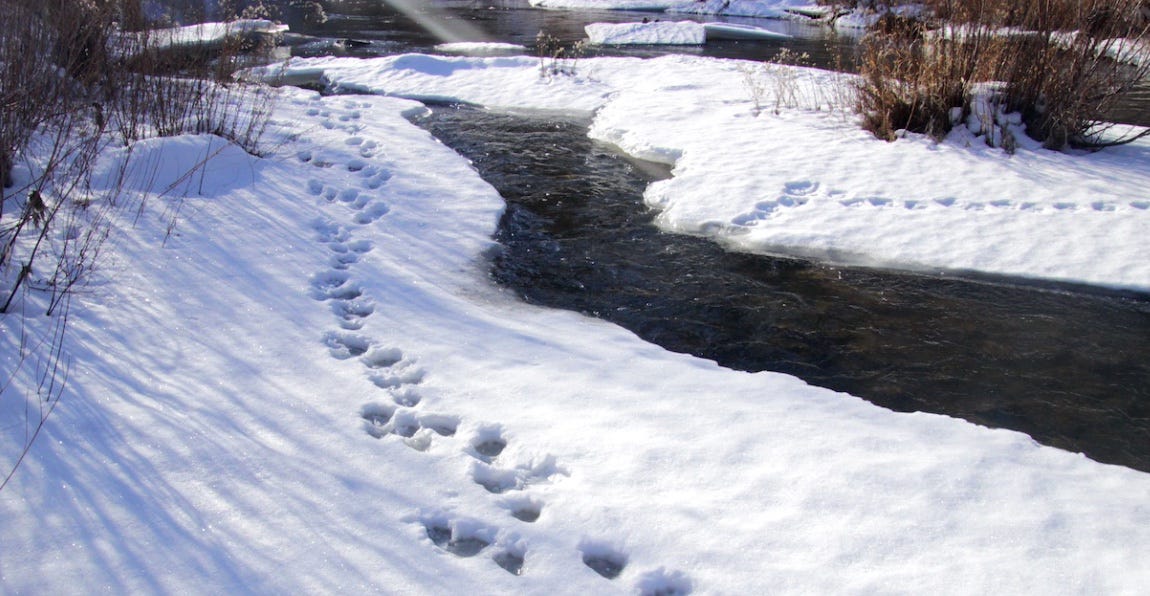
Otter tracks in the snow, lower Latah Creek
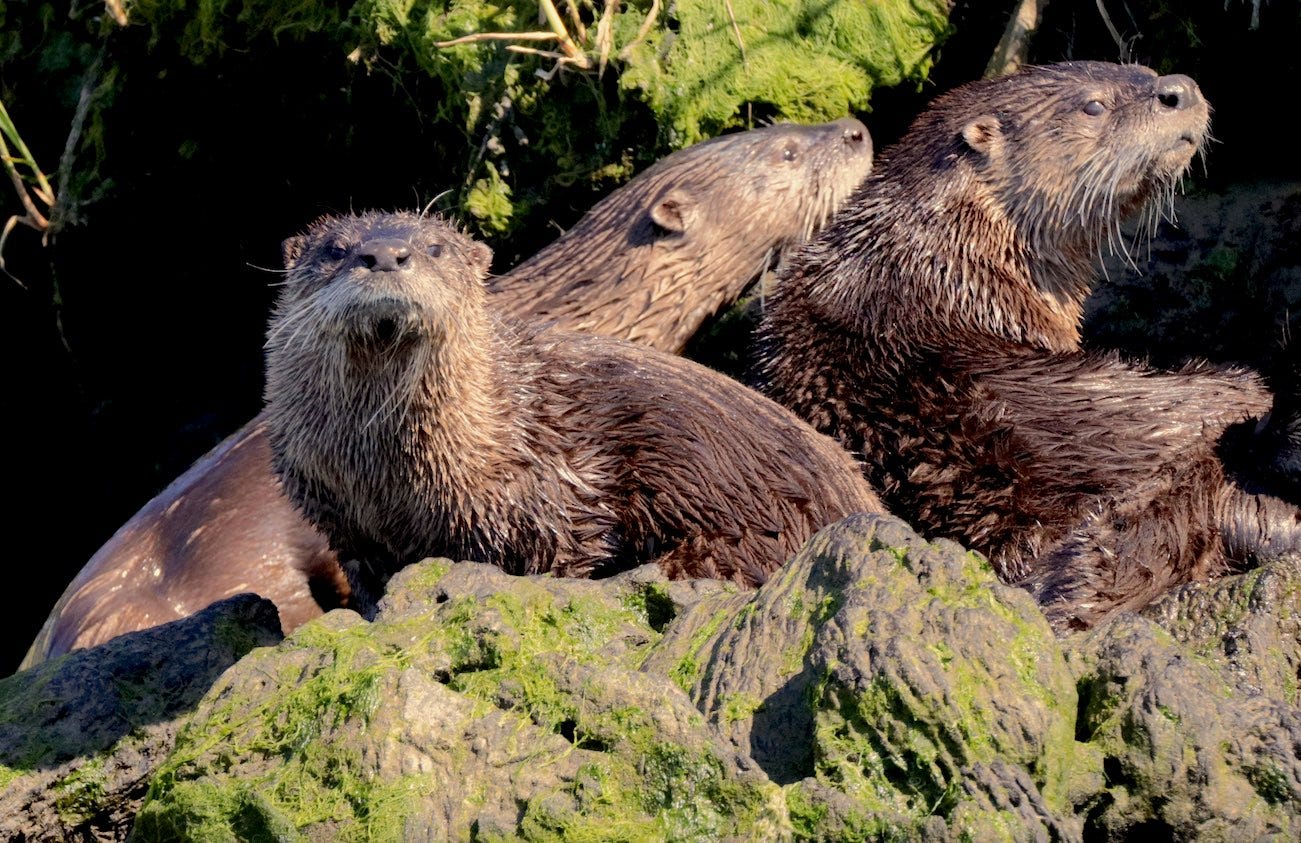
A trio of otters at Joe Creek in Grays Harbor County
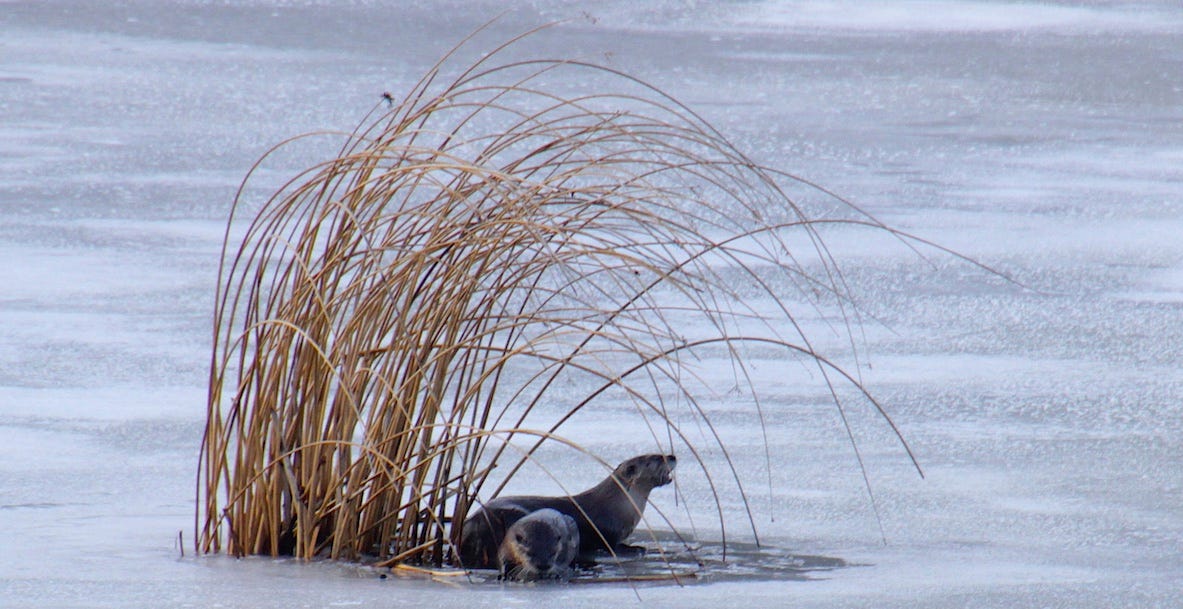
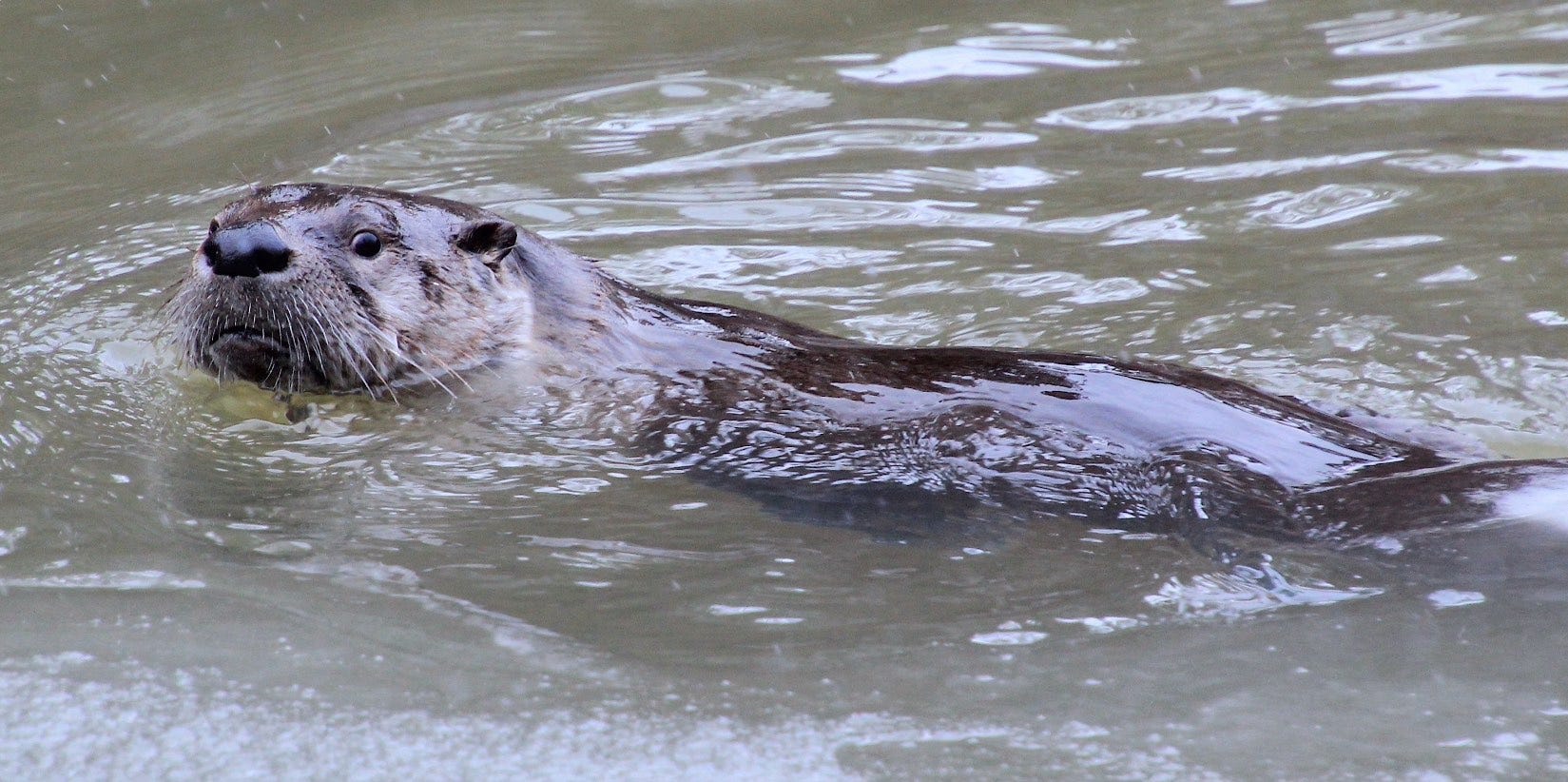
Young otters surfacing through a hole in the ice at a small lake at the Turnbull National Wildlife Refuge south of Cheney, WA.
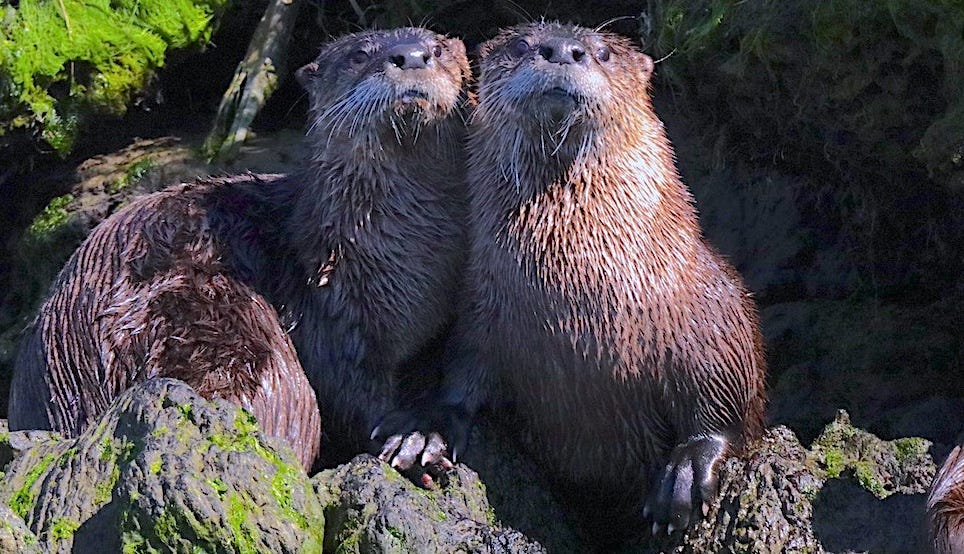
Another glimpse happy group at Joe Creek
— tjc