An enthralling collision
March 31, 2026

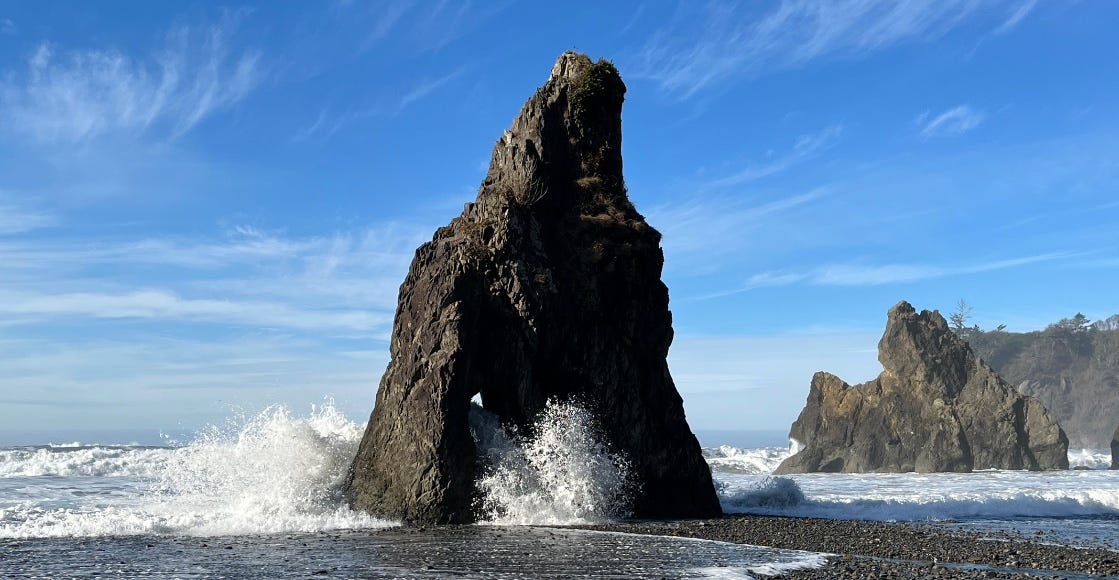
Surf pounding sea stacks at Ruby Beach on the Olympic peninsula
Images from the edge of the wedge
A swell thing about being a photographer in Washington is the spectrum of the state’s natural diversity. It’s remarkable what you can find out there, in the 370 miles between the bucolic town of Palouse tucked in its namesake hills, within walking distance of Idaho, and Cape Flattery at the state’s northwest tip on the Strait of Juan de Fuca.
The climate is so different east to west, as are the contours across the topography—from the rocks of long ago supercontinents in the east to those actively forming in the on-going collision in the west where what remains of the Juan de Fuca plate is still burrowing beneath the North American plate; still pushing up the Olympics and feeding the volcanic eruptions in the Cascades.
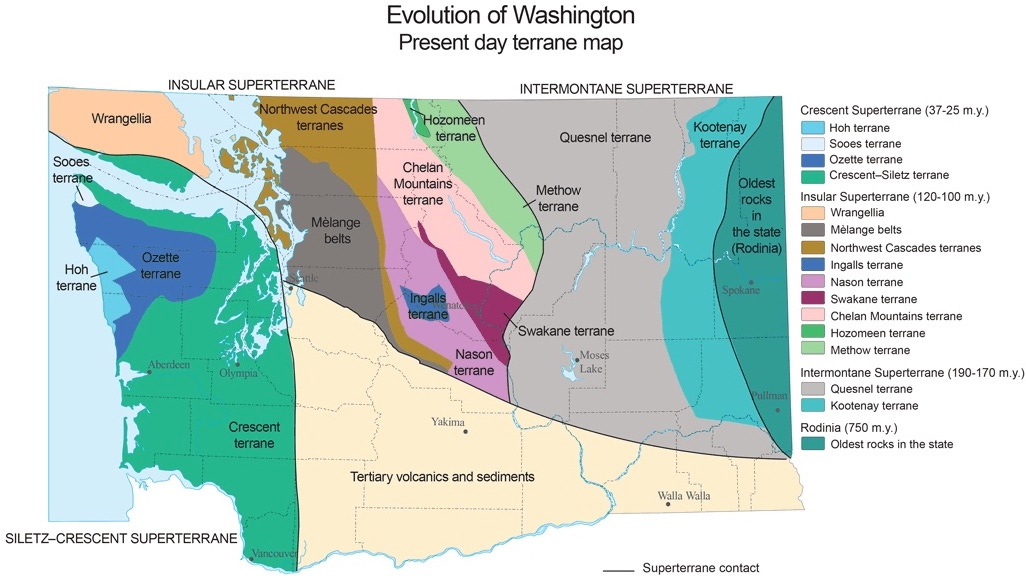
This piece is about the latter—the constant drama of the coast, and favorite spots accessible by the reach of Olympic National Park. The power of the colliding plates is encoded in a remarkable fact. In the Olympic mountains—that reach nearly 8,000 feet above sea level—there is no native granite. The highest peaks primarily consist of sandstone and marine sediments, shoved upward in a melangé from the ocean depths by the force of the impact. At the dramatic Olympic shoreline, what the geologists refer to as the Hoh accretionary wedge takes all manner of photogenic forms.—tjc
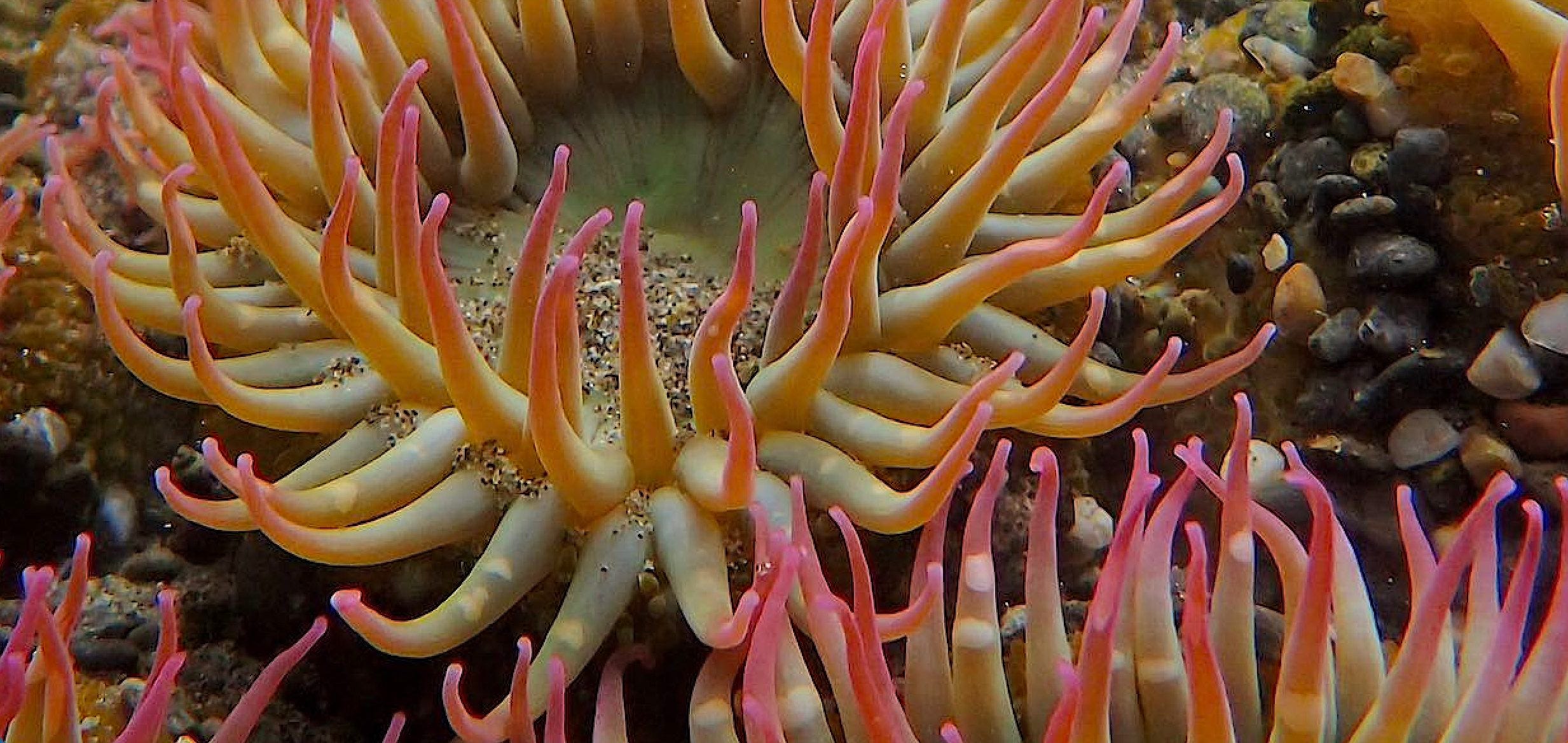
Aggregating anemone in the surf zone at Olympic Beach #3
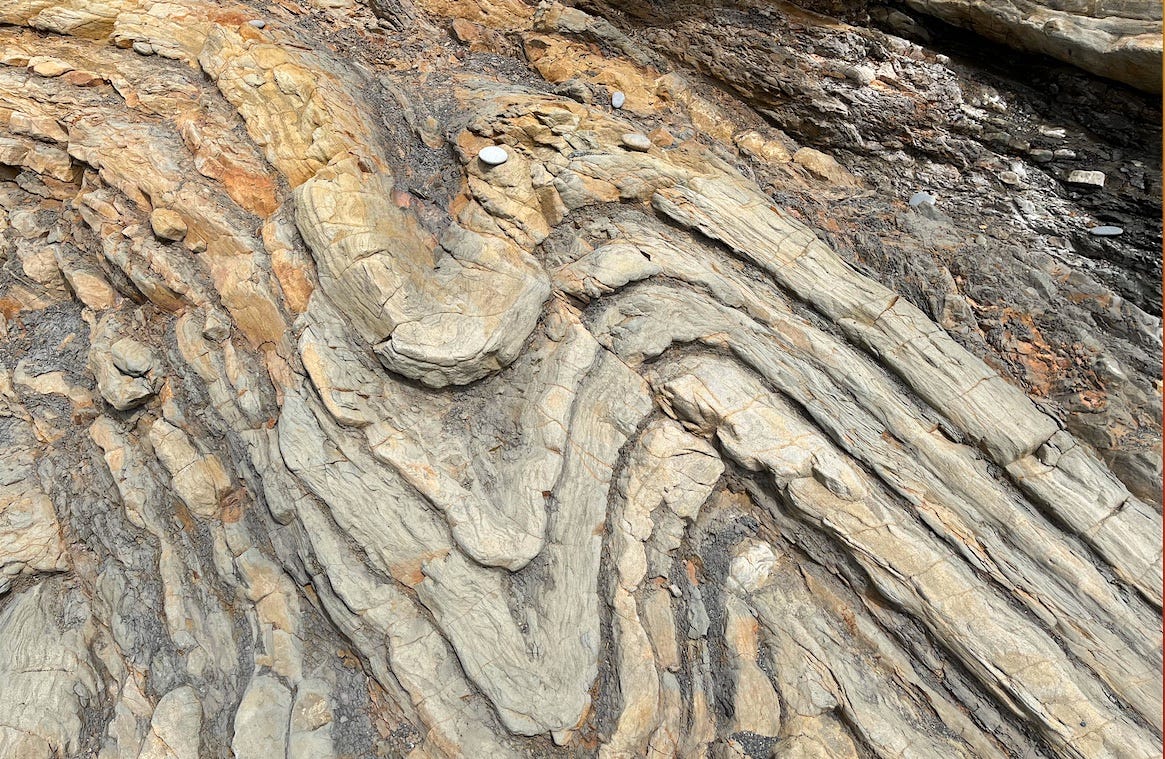
Compressed and deformed sandstone units at Beach #4
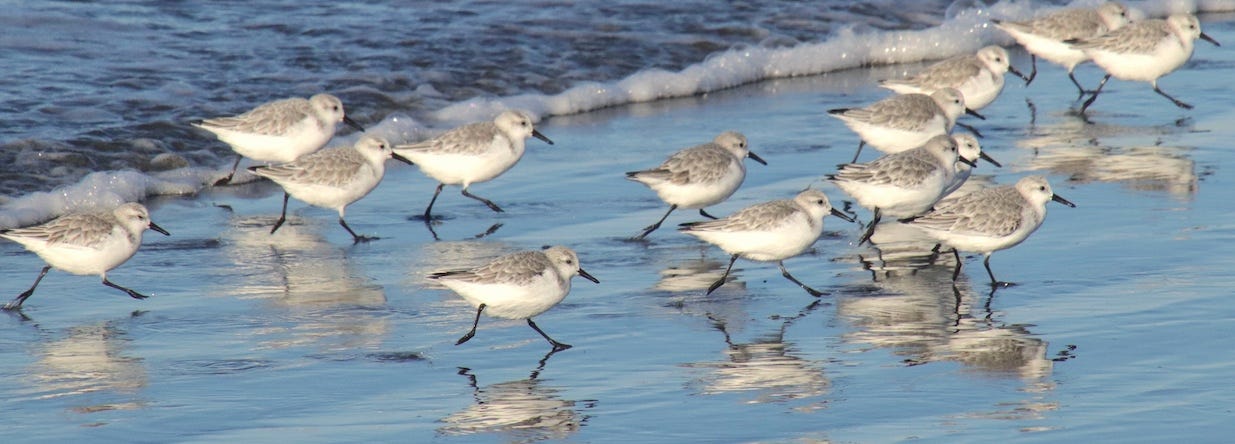
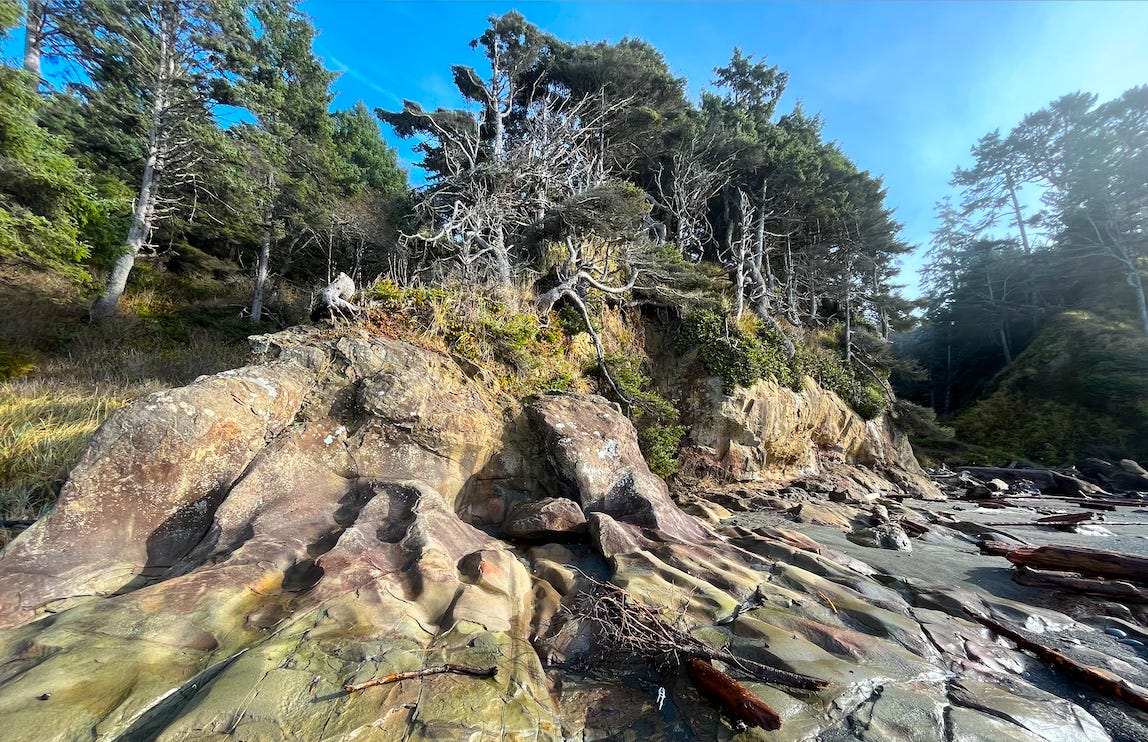
The wave-hammered shoreline at Olympic Beach #3
Please support The Daily Rhubarb with a paid, annual subscription via the link above…
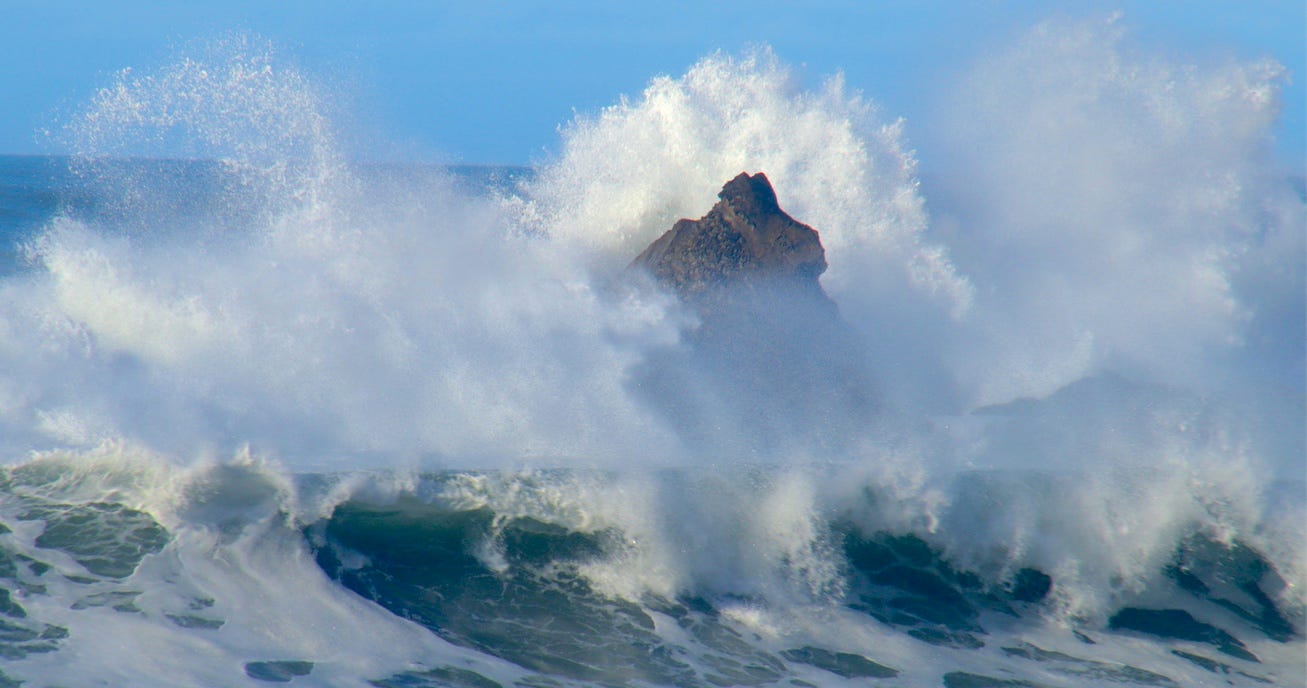
Surf exploding against rocks
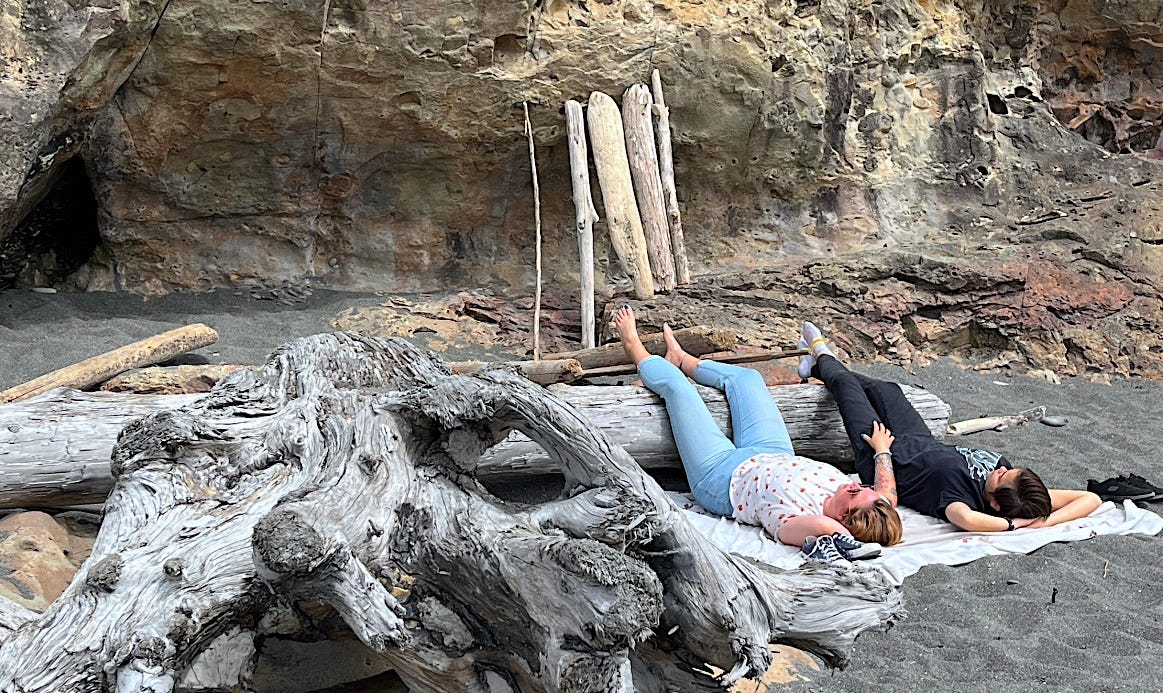
Low-tide at the back of Beach #4
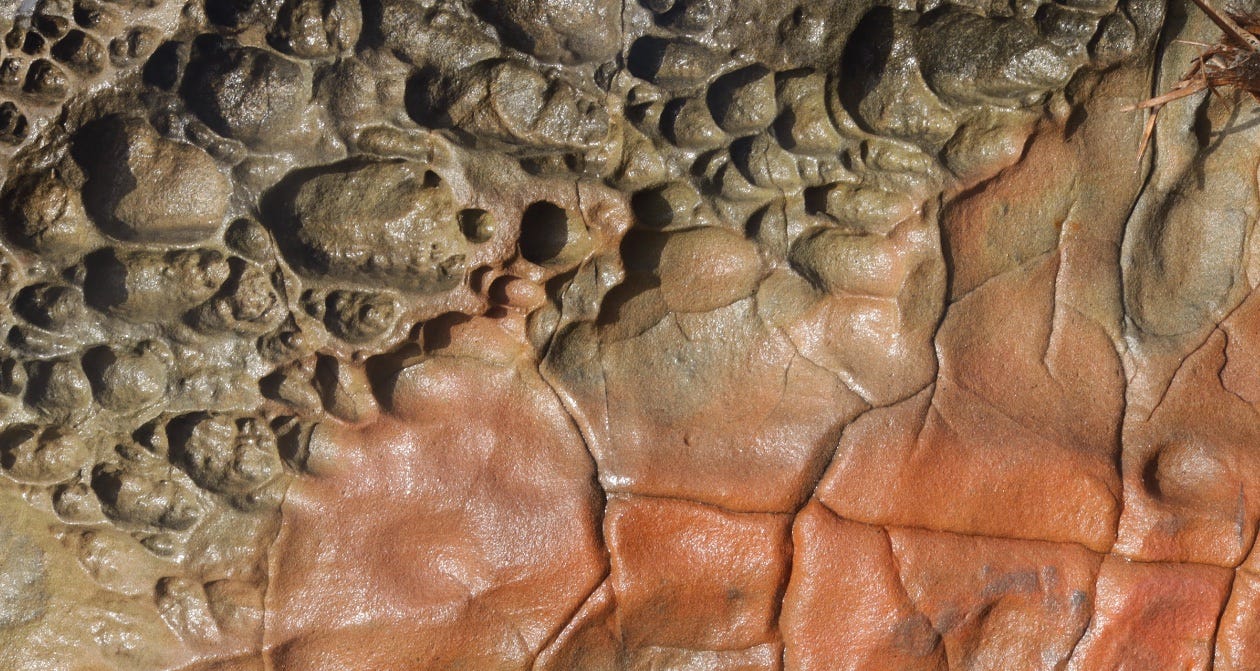
Surf-rinsed melange at Beach #3
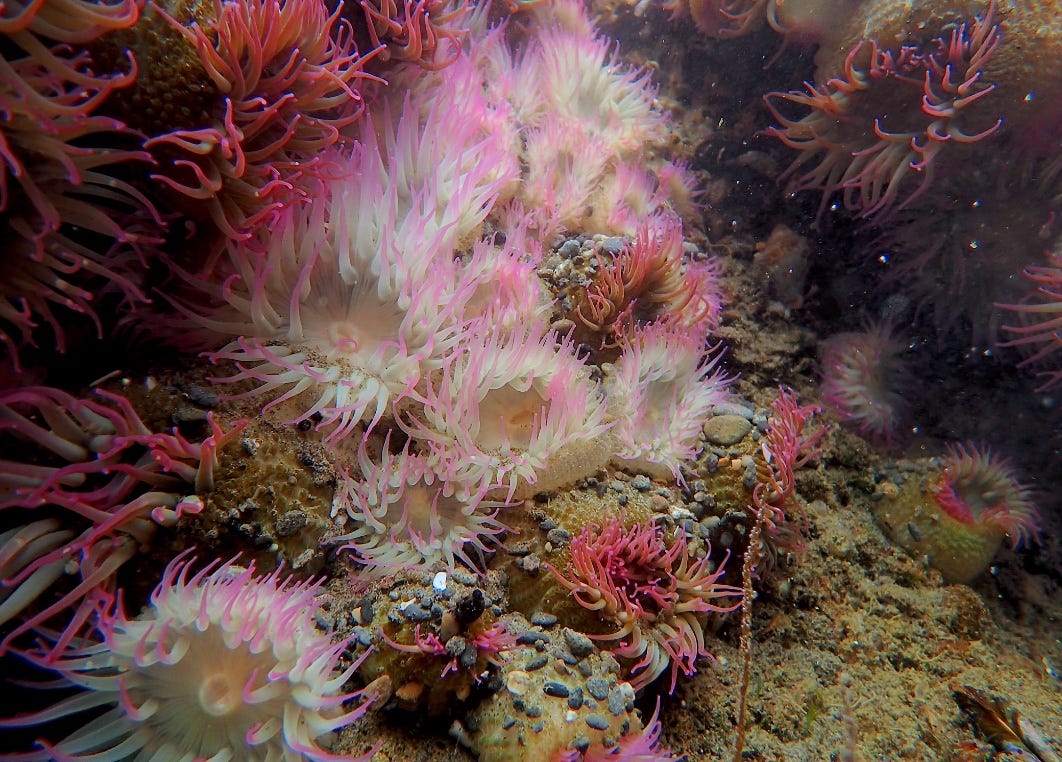
Anemone colony in the surf zone at Beach #3
(Washington terrane graphic courtesy Washington Department of Natural Resources)